
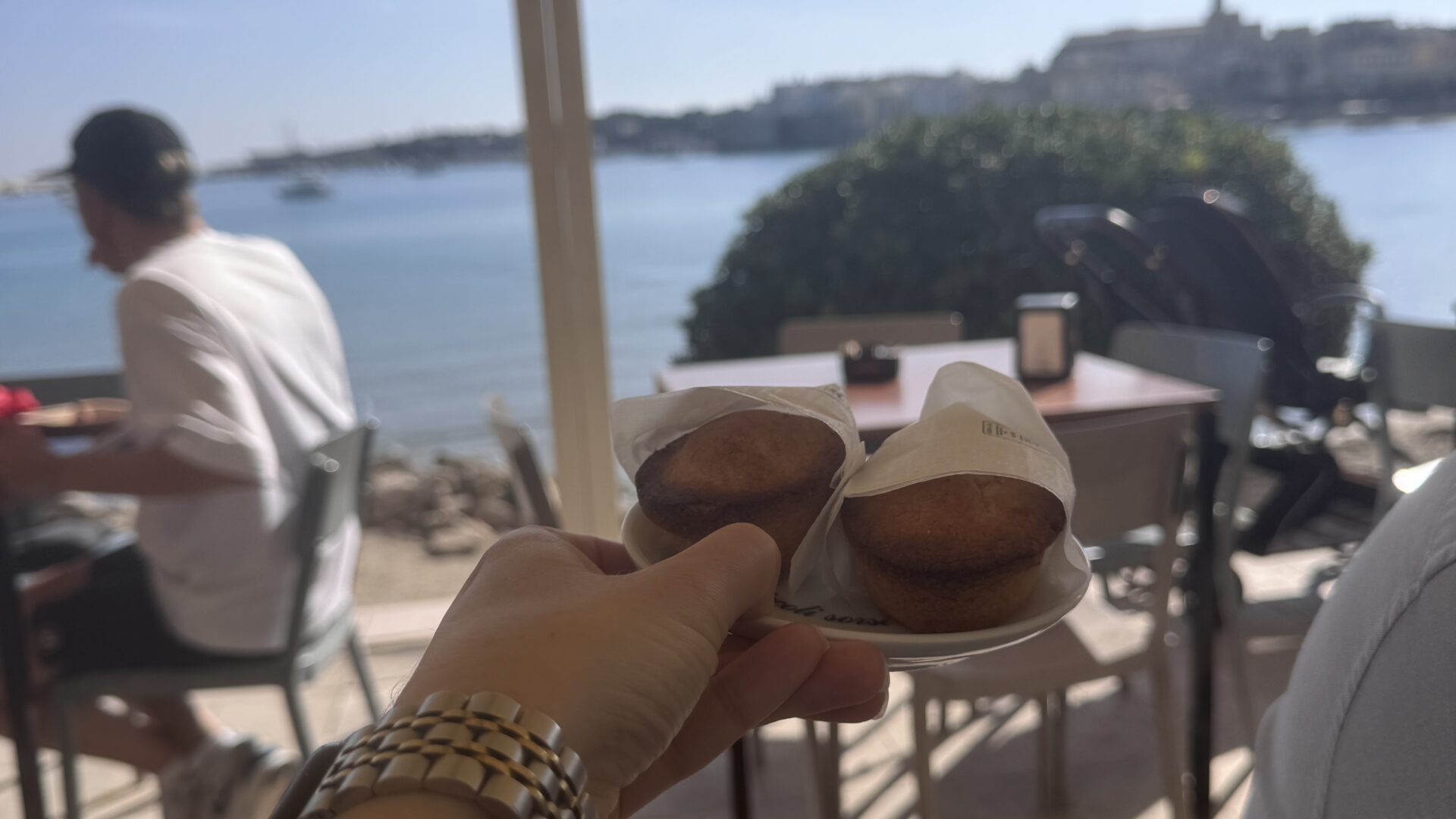
A love letter from a British editor to a mouthful of southern Italian heaven.
Short, buttery, golden pastry surrounding light, creamy custard carrying the hint of Mediterranean lemons.
It may not sound like a food to wax rhapsodic about.
And yet I find myself fantasising about these divine Puglian pastries now that I’m back in the UK, attempting to make them in my kitchen and puzzling over whether I should invest in the special moulds that give them their distinctive lozenge shape.
While faintly aware of their existence, it was’t until my most recent trip to Puglia that I succumbed to my curiosity. And there’s no going back.
You see their lozenge shaped presence in the counter in almost all bars and cafes along the coast, locals digging into them with their morning coffees. They are best enjoyed fresh and slightly warm. Most outlets keep them at a low temperature.
The traditional flavour is that of Italian crem pat, with a hint of lemon, but other varieties abound. A popular choice features a black cherry in syrup, amarena, nestled within the custard, providing a punchy, sweet counterpoint to the rich custard. I will say that I ventured too far from tradition with ricotta and pistachio creme filled version but actually found that it tasted synthetic and unpleasant. I didn’t make the same mistake again and reverted back to the traditional variety.
A little messy
Essentially, pasticiotti are Italian custard tarts and their name literally translates to ‘little mess’. Popular theory has it that they were named such because they were invented by a down on his luck pastry chef who had been experimenting with new ideas and had a load of pastry scraps and creme patisserie left over. He put the pastry and custard into a mould and created slightly messy looking tarts, which he then gave to the local priest, who loved them. And the rest is history. But maybe that is why they’re so popular. Unfussy, simple and yet somehow one of the best things I have ever eaten.
Try this at home
Since being back in the UK, I’ve tried my hand at making them with varying degrees of success. The first batch has divine pastry but slightly lumpy, not very lemony filing. The second batch, which I made with lard was a disaster. The pastry disintegrated like sand and fell to bits. The custard was bang on. So now I need to attempt it for the third time, using the pastry method from the first attempt and the custard from the second so I can have my fill of Italian treats all year round.
Best places to try pasticiotti
Borderline, Otranto
Maybe it’s because it’s the first place we tried them, maybe its because of the setting, or maybe they are just the best, but the pasticiotti here were delightful. Well filled, warm, faintly lemony, it was love at first bite.
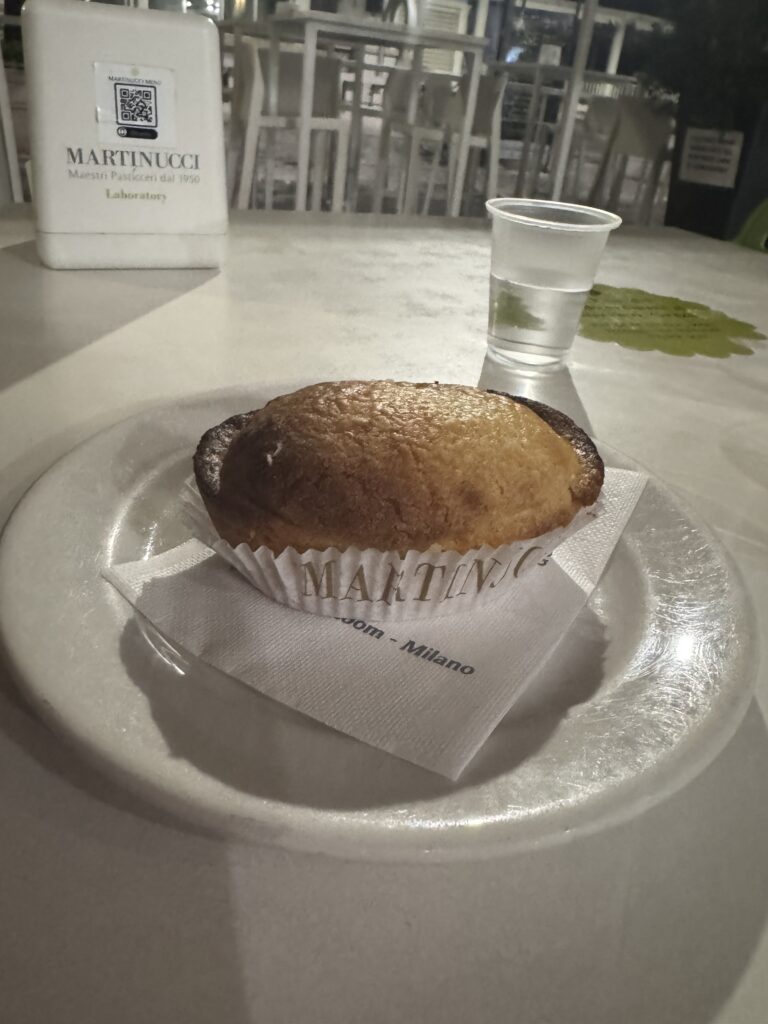
Martinucci, Otranto
This establishment was a little larger and is a chain and they sell all different flavours. I must admit it was a little overwhelming.
Pasticceria Natale
I loved this little place by the Aragonese Castle. It’s a small hole in the wall, but it features fun Renaissance art with pasticiotti added in. And the pastry on these ones really did melt in the mouth.
